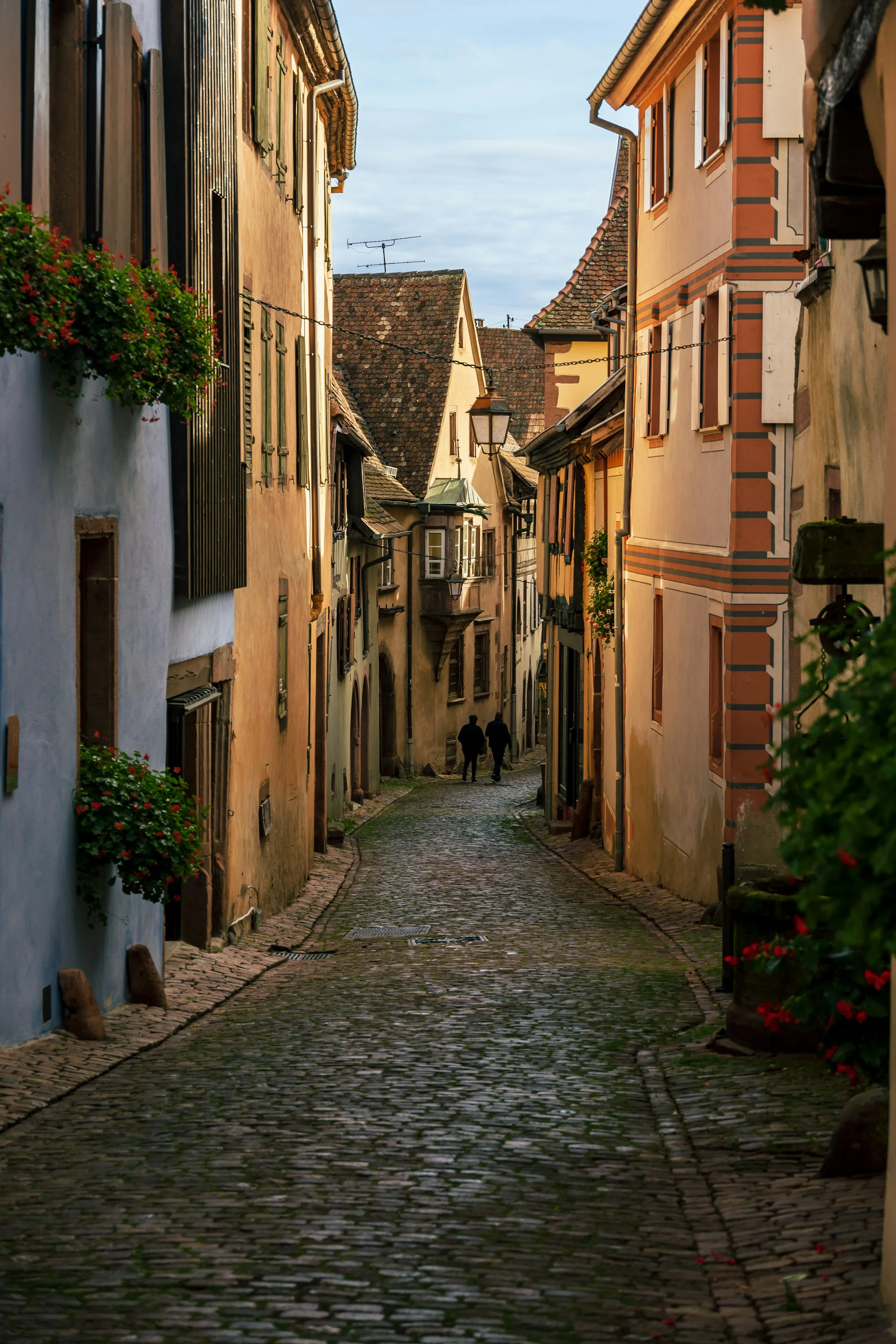
Noyers-sur-Serein and Tonnerre
One of France’s most beautiful villages and a small town with a unique hydrological treasure, in the same valley as Chablis.
Noyers-sur-Serein
Between half-timbering and dressed stone, carved colonnettes and pinnacles, granite and limestone cobbles, narrow lanes and a succession of little squares, towers lapped by the meanders of the Serein: medieval Noyers fully earns its title of one of the most beautiful villages in France.
By day or by night, walking the main street of the town, it takes very little imagination to picture knights, peasants, clerks and burghers going about their business — or to half expect a minstrel’s song to drift down from one of the sixteen towers along the ramparts.
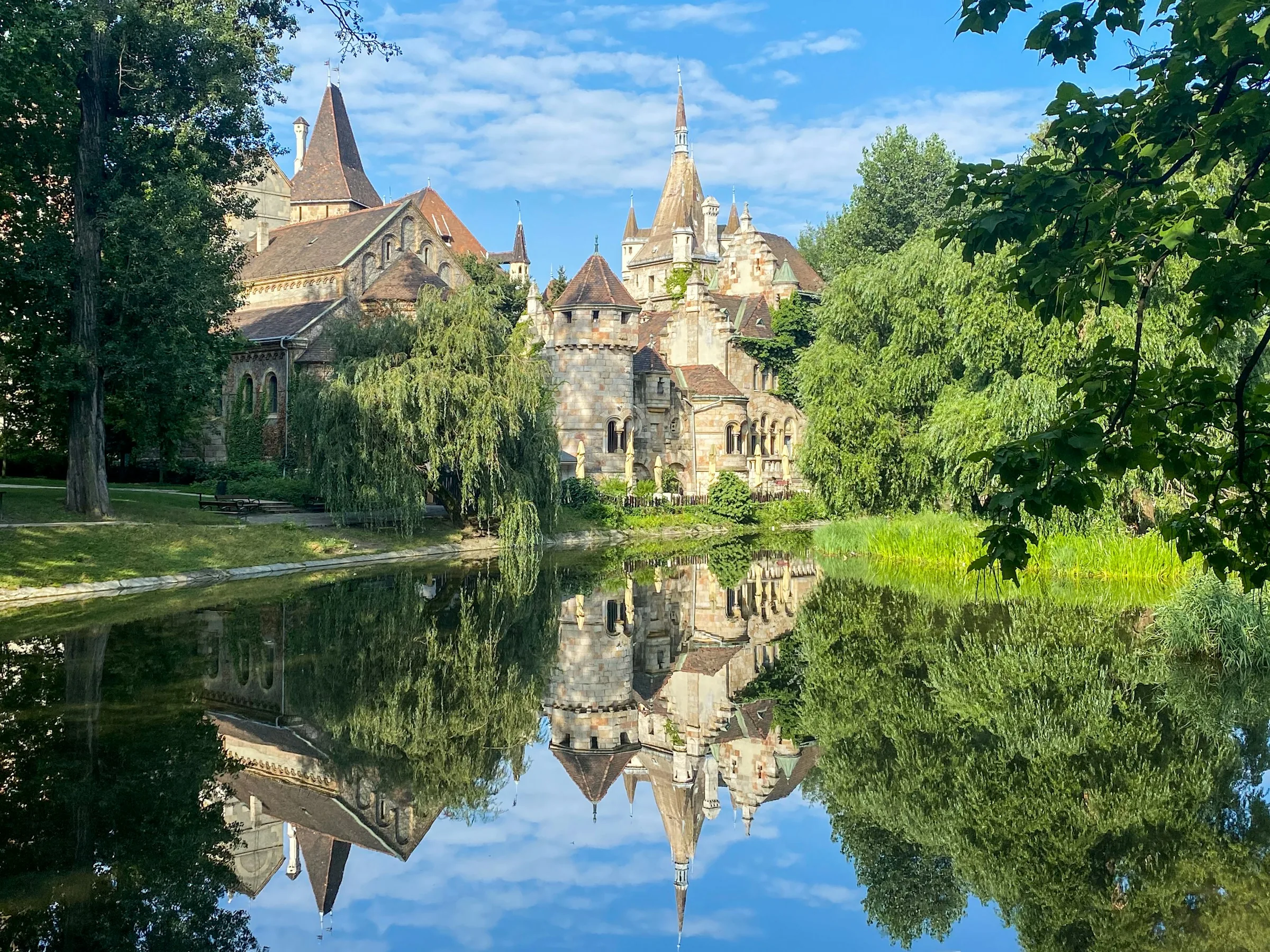
Tonnerre, the Fosse Dionne and the Hôtel-Dieu
Despite its name — tonnerre means thunder — Tonnerre is a peaceful little town which in the 16th century bought its own quiet, wedged between the Coligny at Tanlay and the Condé at Noyers.
That longing for stillness radiates from the Fosse Dionne. Once used as a washhouse and ringed by a covered gallery, this circular basin is fed by a Vauclusian spring whose flow varies with the rain — as does the colour of the water with the weather and the seasons. The place long fuelled the most extravagant beliefs.
Very real and very useful: the old hospital, or Hôtel-Dieu, founded by Marguerite of Burgundy, widow of Charles of Anjou, at the end of the 13th century. It served as the model for the Hôtel-Dieu in Beaune. The great hall of the sick is practically intact: panelled vault, a church at the far end of the hall, a gnomon engraved in the floor, an Entombment in stone and the tomb of Louvois.
The church of Saint-Pierre in Tonnerre
A papal bull of 1148 appears to be the first mention of Saint-Pierre, probably then a chapel. It is thought to have been built on the old Roman stronghold of Castrum Tornodorense, as ancient coins found on the site suggest.
The square tower overlooking the Fosse Dionne dates from the 16th century. The organ, famous throughout the region, dates from 1616 and was rebuilt in 1679, when its case received a remarkable Baroque decoration. It still plays today.
Useful information
- Noyers-sur-Serein from the house — 25 km, about 30 minutes
- Tonnerre from the house — 30 km, about 30 minutes
- Time at Noyers — 2 h wandering the town, no car needed
- Time at Tonnerre — 1 h 30 for the Fosse Dionne and the Hôtel-Dieu
- Combine with — Tanlay and Ancy-le-Franc, on the same axis
- By bicycle — Noyers can be reached along the Serein — 45 km round trip
Combine it with
- Cycling and nature stay — the long loop runs through Noyers.
- Tanlay and Ancy-le-Franc castles — pair them with Tonnerre in one day.
- The region — everything to see around Chablis.
- Photo gallery — look at the house again before booking.
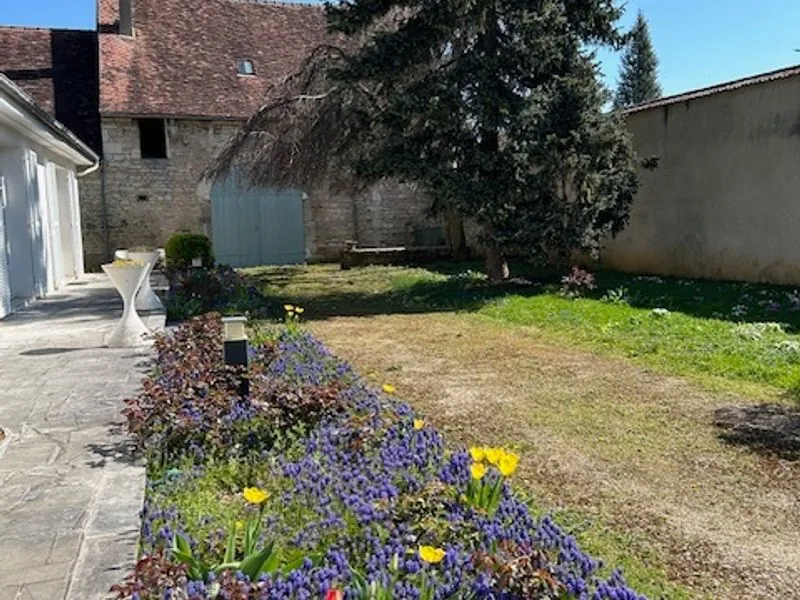
Book the house for your next holiday in Chablis
Available all year round, from a weekend to a full week. Write to us — we answer every enquiry personally, usually within 24 hours.